From Customer Experience to Competitive Advantage: What Mystery Shopping Can Reveal
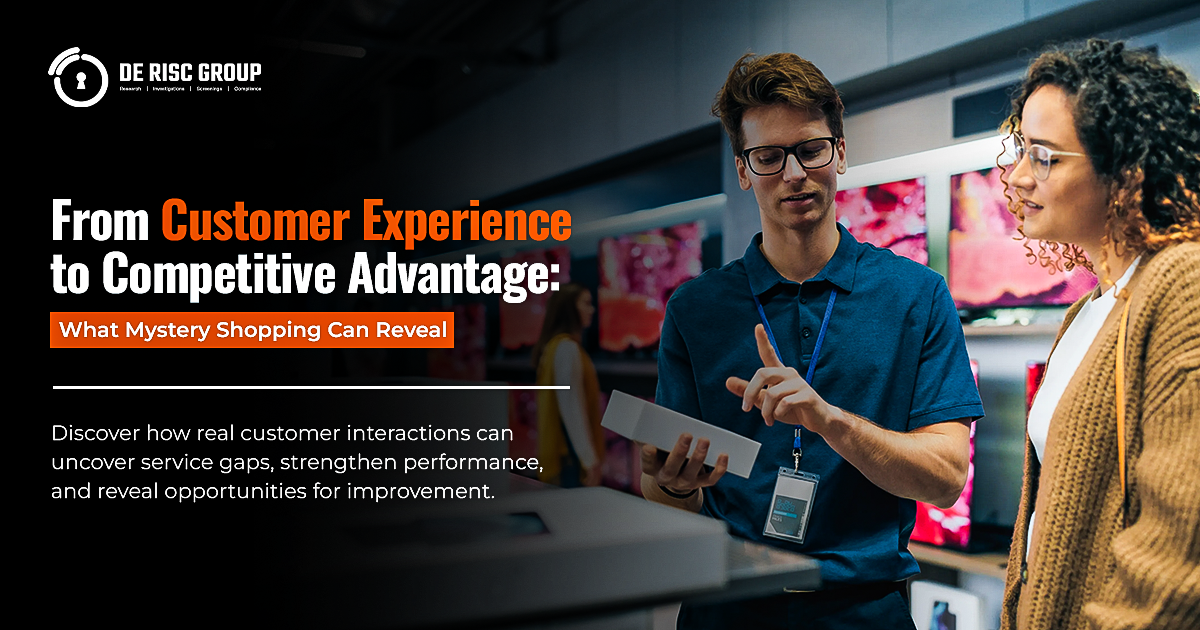
A business can have a great product, competitive pricing, and a strong brand, yet still lose customers because of one thing: the experience. What management believes customers experience and what actually happens during an interaction are not always the same. A customer may wait too long for assistance, receive inconsistent information, struggle with a complicated process, or encounter a competitor offering a smoother experience.
These details can be difficult to identify through sales reports or internal performance data alone. This is where mystery shopping can provide a valuable outside perspective. By observing real customer interactions against defined criteria, businesses can uncover service gaps, operational weaknesses, competitor strengths, and opportunities for improvement. More importantly, these findings can become competitive intelligence.
Table of Contents
- The Experience Gap Businesses Often Miss
- Beyond the Mystery Visit: What Businesses Can Learn
- Where Customer Experience Breaks Down
- What Competitors Can Reveal
- Turning Customer Insights Into Action
- Mystery Shopping and Market Intelligence
- How DE RISC Supports Smarter Market Decisions
- Key Takeaways
- FAQs
The Experience Gap Businesses Often Miss
Most businesses have clear ideas about how customers should be treated. They may have service standards, employee training, brand guidelines, and detailed customer-service procedures. But having a process does not guarantee that it is followed consistently. One location may provide excellent service while another struggles with basic customer interactions. An employee may know the product well but fail to communicate its value effectively. A customer may also experience unnecessary delays or confusion that management never sees. Mystery shopping helps businesses investigate this gap between expected experience and actual experience. Instead of relying only on assumptions or customer complaints, businesses can proactively observe what happens.
Beyond the Mystery Visit: What Businesses Can Learn
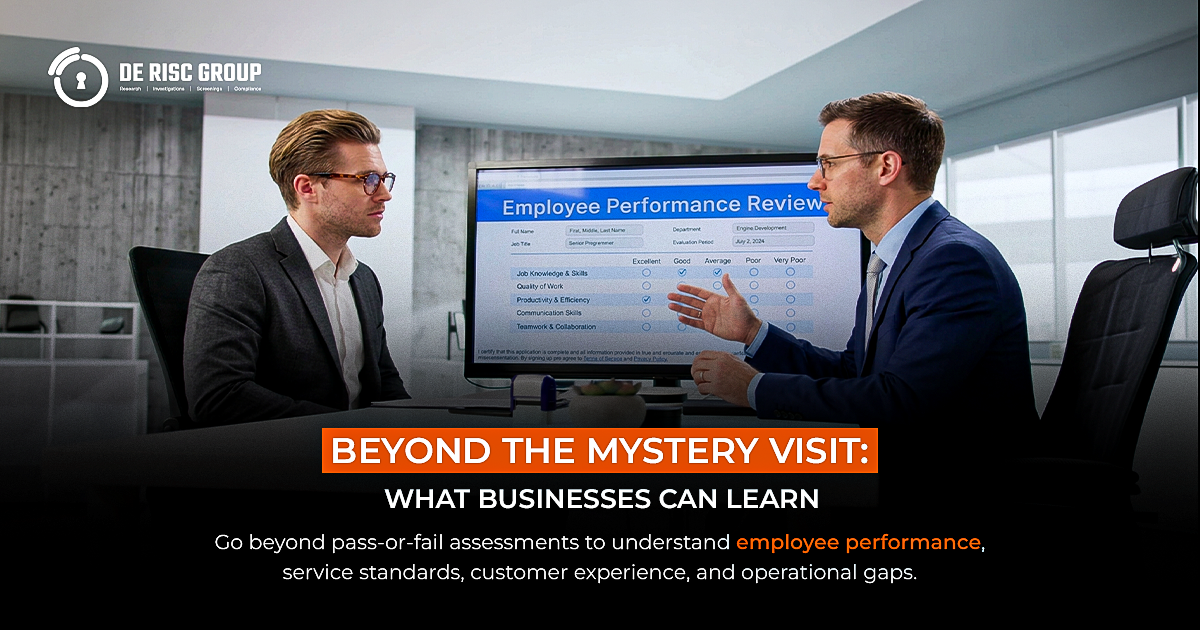
Mystery shopping is more than sending someone into a store and asking them to make a purchase. A well-designed programme begins with a clear business objective.
Evaluators can assess areas such as:
- Employee knowledge
- Response times
- Customer engagement
- Quality of communication
- Service standards
- Product or service presentation
- Complaint handling
- Purchasing processes
- Overall customer experience
The criteria can be adapted to the organisation and the questions it needs answered. The goal is not simply to determine whether an employee “passed” or “failed.” The real question is: What does the interaction reveal about the business?
Where Customer Experience Breaks Down
Some of the most important problems are not dramatic. They are small points of friction repeated across hundreds or thousands of customer interactions. A customer may have to repeat information. An employee may provide conflicting answers. A process may take longer than necessary. A complaint may be passed between departments. Individually, these issues may appear minor.
Collectively, they can influence customer trust, satisfaction, and loyalty. Mystery shopping gives businesses a structured way to identify these moments. It can also highlight the difference between what a company promises and what customers actually receive. That insight can help businesses address problems before they become larger customer-retention issues.
What Competitors Can Reveal
Competitive intelligence does not always come from market reports or pricing research. Sometimes, businesses can learn by experiencing what competitors offer. Mystery shopping can help organisations assess competitor experiences against defined criteria.
- How quickly are customers helped?
- How knowledgeable are employees?
- How easy is the purchasing process?
- How are questions handled?
- How does the competitor create a positive customer experience?
These observations can reveal where competitors may have an advantage. More importantly, they can help businesses identify opportunities to differentiate themselves. The purpose is not to copy competitors. It is to understand what they are doing differently and what customers may value about that difference.
Turning Customer Insights into Action
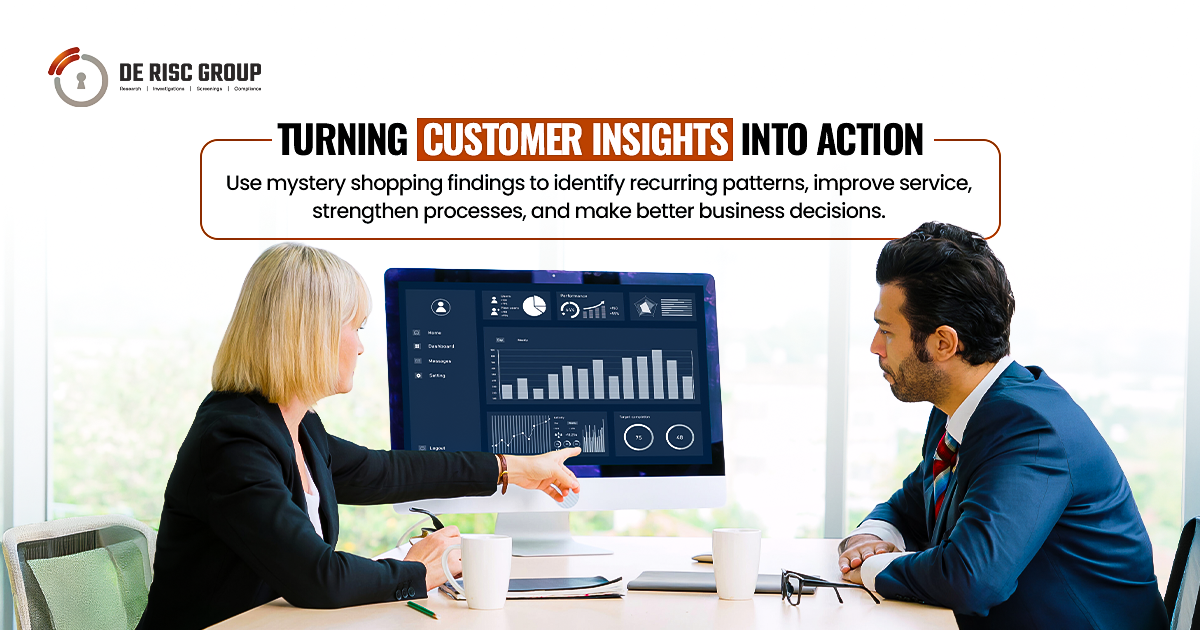
Collecting information is only the beginning. The real value of mystery shopping comes from turning observations into improvements.
A useful approach is simple:
- Observe
- Identify what is actually happening during customer interactions.
- Analyse
- Look for recurring patterns rather than focusing only on individual incidents.
- Are certain locations underperforming?
- Are the same service gaps appearing repeatedly?
- Are competitors consistently stronger in particular areas?
- Improve
- Use the findings to strengthen training, processes, communication, or customer-service standards.
This turns mystery shopping from a monitoring exercise into a business improvement tool. It also gives management evidence for deciding where attention and resources are needed most.
Mystery Shopping and Market Intelligence
Mystery shopping can be particularly useful when businesses are trying to understand a market. Market research can provide information about market size, consumer behaviour, competitors, trends, and broader conditions. But research data does not always show what customers experience on the ground. Mystery shopping adds an observational perspective. It can help businesses understand how established competitors interact with customers and what service standards appear to matter in a particular market.
This can be valuable for companies considering expansion. A market may look attractive based on economic or industry data. But understanding how customers are served within that market can help businesses determine how they could compete once they enter it.
How DE RISC Supports Smarter Market Decisions
At DE RISC Group, Mystery Shopping forms part of our wider Market RISC Assessment services.
Our approach can be tailored around the specific questions a business needs to answer. Alongside Mystery Shopping, Market RISC Assessment includes Market Research, Feasibility Studies, and Intellectual Property Infringement Investigations. These services provide different perspectives on a market. Market Research can help businesses understand trends, competitors, and consumer behavior.
Feasibility Studies can help assess whether a potential opportunity is commercially and strategically viable. Intellectual Property Investigations can help identify potential risks involving brands, products, and intellectual property. Mystery Shopping adds another layer by showing what the customer experience actually looks like.
Together, these insights can give businesses a more complete understanding of the opportunities and risks surrounding a market
Key Takeaways
Mystery shopping is not simply about monitoring employees.
It can provide businesses with valuable insight into their operations, competitors, and customer experience.
The most important lessons are:
- Experience matters: A strong product can still be undermined by poor customer interactions.
- Policies are not enough: Businesses need to know whether standards are actually being followed.
- Small problems can add up: Repeated points of friction can influence customer loyalty.
- Competitors provide useful intelligence: Their customer experience can reveal opportunities for differentiation.
- Consistency matters: Mystery shopping can identify differences between locations and customer touchpoints.
- Observation supports better decisions: Real-world insights can complement traditional market research.
- Action creates value: Findings are most useful when they lead to measurable improvements.
FAQs
What is mystery shopping?
Mystery shopping is a structured research method where evaluators interact with a business as customers and assess specific aspects of the experience against predefined criteria.
What can mystery shopping reveal?
It can reveal service gaps, employee knowledge issues, operational weaknesses, inconsistencies, customer-journey friction, and opportunities for improvement.
Can mystery shopping assess competitors?
Yes. Businesses can use structured assessments to understand how competitors interact with customers and identify areas where they may have a competitive advantage.
Is mystery shopping only for retail?
No. It can be adapted for many customer-facing industries, including hospitality, financial services, telecommunications, automotive, travel, healthcare, education, and professional services.
Can mystery shopping support market expansion?
Yes. It can provide practical insight into how competitors operate and how customers experience businesses within a particular market.
How does mystery shopping support competitive advantage?
It helps businesses identify weaknesses in their own customer experience, understand competitor strengths, and discover opportunities to improve and differentiate.