The Cost of Moving Too Fast: Why Business Decisions Need a Feasibility Check
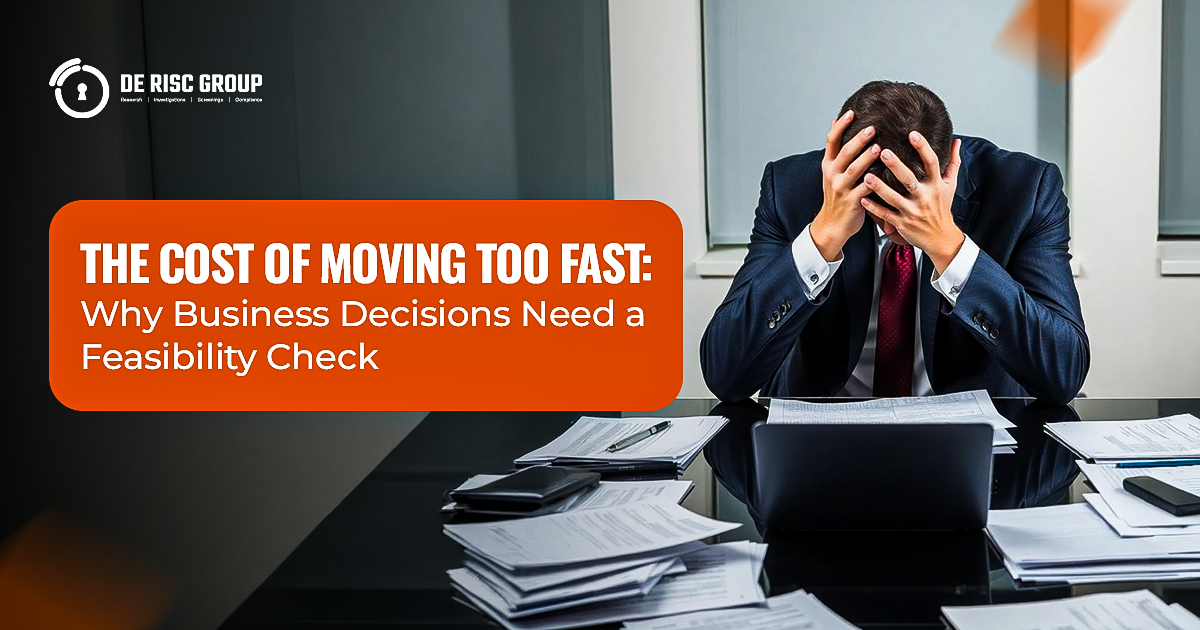
Growth often rewards businesses that recognize opportunities and act on them. A new market opens up, a promising product attracts attention, or an expansion plan appears too good to ignore. The pressure to move quickly can make hesitation feel like a missed opportunity. But not every promising idea is ready for investment.
A market may look attractive without offering enough customer demand. A project may appear profitable before hidden costs are considered. Even a business with the right expertise may lack the resources to deliver its plans successfully. These gaps are not always obvious at the beginning. They often emerge after money has been committed, deadlines have been set and expectations have grown. This is where a feasibility check becomes valuable. By examining market demand, financial expectations, operational capacity and potential risks before committing resources, businesses can make decisions based on evidence rather than enthusiasm alone.
Table of Contents
- Why Good Ideas Can Become Costly Mistakes
- What Is a Feasibility Study?
- Is There a Real Market for the Opportunity?
- Do the Numbers Actually Make Sense?
- Can Your Business Deliver on the Plan?
- What Could Go Wrong?
- Why Timing Matters as Much as the Idea
- Turning Research Into Better Business Decisions
- How DE RISC Group Supports Feasibility Assessments
- FAQs
1. Why Good Ideas Can Become Costly Mistakes
Many business decisions begin with a genuine opportunity. Customer interest may be growing, competitors may be expanding, or a new location may appear to offer better returns. The challenge is that an opportunity can look convincing without being commercially viable. Consider a company planning to launch a new service. Early conversations suggest strong demand, and the team expects the launch to generate additional revenue. However, the company has not yet assessed customer willingness to pay, the cost of acquiring customers or the resources required to deliver the service. Once the project begins, these assumptions may prove inaccurate. The problem is not necessarily that the original idea was bad. It is that important questions were left unanswered. Moving quickly without sufficient assessment can turn an opportunity into an avoidable expense. A feasibility check helps businesses identify these gaps before they become harder and more expensive to address.
2. What Is a Feasibility Study?

A feasibility study evaluates whether a proposed project, investment or business initiative is practical and has a reasonable prospect of success. Rather than relying on a single factor, it considers several aspects of the opportunity. These commonly include market demand, financial viability, operational requirements, available resources and potential risks. The purpose is not to guarantee success. No assessment can eliminate uncertainty or predict every market change. Instead, it helps decision-makers understand the conditions required for a project to work and whether those conditions are realistic. A feasibility study can also reveal when a plan needs to change. A business might discover that a smaller launch is more appropriate, that a different customer segment offers greater potential, or that additional resources are needed before proceeding. This makes feasibility assessment useful not only when businesses are launching something new, but also when they are considering expansion, entering another market or committing to a major investment.
3. Is There a Real Market for the Opportunity?
An idea can generate excitement internally without attracting enough customers to support it. Businesses may interpret positive feedback, industry trends or competitor activity as evidence of demand. However, interest does not always translate into purchases, and a growing market does not automatically mean that every new entrant will succeed. Market assessment helps distinguish an attractive possibility from a commercially realistic opportunity. Before investing, businesses should consider who their target customers are, what problem the proposed product or service solves, what customers are willing to pay and how competitors are already meeting that need. It is also important to understand whether demand is sustainable. A product attracting attention because of a temporary trend may have a very different outlook from one addressing an ongoing customer need. These questions help businesses assess whether there is a realistic market for the proposed venture. They can also highlight opportunities to refine pricing, adjust the offering or target a more suitable customer group before launch.
4. Do the Numbers Actually Make Sense?
Even when demand exists, a project can struggle if its financial assumptions are unrealistic. Initial budgets often focus on the most visible expenses, such as equipment, premises, staffing or product development. Other costs may receive less attention, including marketing, maintenance, distribution, regulatory requirements and unexpected delays. These expenses can affect the project's overall profitability. A financial feasibility assessment examines the expected costs, potential revenue, funding requirements and likely return on investment. It can also help businesses understand how changes in sales, pricing or operating expenses might affect the outcome. For example, a new location may appear profitable based on expected sales. But if rent, staffing and distribution costs are higher than anticipated, the investment may take much longer to recover its initial cost. Evaluating different scenarios before committing funds allows decision-makers to understand both the potential rewards and the financial pressure the project could create. The goal is not to produce the most optimistic forecast. It is to develop a realistic picture of what the business may need to invest and what it could reasonably expect in return.
5. Can Your Business Deliver on the Plan?
A project may have market potential and a promising financial outlook, yet still be difficult to execute. This often happens when businesses focus on what they want to achieve without fully assessing what delivery will require. A new product may need specialist staff, additional technology or a more complex supply chain. Expansion into another region may require local expertise, new distribution arrangements or a different operating model. Without the right capabilities, even a viable idea can encounter delays, quality problems and rising costs. An operational feasibility assessment examines whether the business has the people, systems, infrastructure, expertise and time required to execute the plan. Where gaps exist, businesses can consider whether to recruit, train employees, secure external support or adjust the project's scope.
Understanding these requirements early makes it easier to plan realistically rather than trying to solve fundamental operational problems after the project is underway.
6. What Could Go Wrong?
No business opportunity comes without risk. The important question is whether those risks have been identified and considered before the organisation commits itself. Potential challenges may include stronger competition, changing customer preferences, supplier disruptions, regulatory requirements, limited funding or unexpected operating costs. Some risks are specific to the project, while others arise from the wider market or business environment.
A feasibility study helps decision-makers identify relevant uncertainties, consider their potential impact and determine whether appropriate mitigation measures are available. For instance, a business entering a new market may discover that customer demand is promising but local competition is stronger than expected. That information could influence its pricing strategy, launch budget or choice of location. Similarly, a project that depends heavily on a single supplier may require alternative sourcing arrangements before proceeding.
Not every risk can be avoided. However, understanding what could go wrong and how the business might respond can help prevent avoidable surprises from undermining the entire investment.
7. Why Timing Matters as Much as the Idea
A viable opportunity may still be unsuitable at a particular time. Market conditions can change, funding may be limited, and a business may already be managing several demanding projects. Launching an initiative without considering these factors can place unnecessary pressure on existing operations. Feasibility assessment helps businesses evaluate whether the conditions are right to proceed now. Sometimes, the findings support immediate action. In other cases, they may suggest waiting until additional funding is available, customer demand becomes clearer or the organisation has developed the necessary capabilities. Delaying a project is not always a missed opportunity. It can be a strategic decision that gives the business time to strengthen its position. Equally, a feasibility check may show that an opportunity has a limited window and that a carefully planned response is preferable to prolonged hesitation. The value lies in understanding the timing, not simply choosing between moving quickly and moving slowly.
8. Turning Research Into Better Business Decisions
A feasibility study is only useful if its findings influence the final decision. Businesses should use the assessment to determine whether to proceed, revise the plan, gather additional information or abandon the proposal. If market demand is strong but costs are too high, the business might adjust its pricing or operating model. If the opportunity is attractive but internal resources are limited, a phased launch may be more practical than a large-scale investment. The findings should also identify the assumptions that need continued attention. Market conditions, customer behaviour and operating costs can change, so decisions should be reviewed when important new information becomes available. This approach makes feasibility assessment part of a broader decision-making process rather than a document prepared simply to approve an investment. Most importantly, it encourages businesses to challenge their own expectations. A sound decision is not necessarily the one that supports the original idea. It is the one that reflects the available evidence and the organisation's ability to act on it.
9. How DE RISC Group Supports Feasibility Assessments
At DE RISC Group, our Feasibility Study service helps businesses evaluate the potential viability of proposed projects, investments and new market opportunities. The assessment considers factors such as market potential, expected profitability, operational capabilities and the risks that could affect the project's success. By examining these areas before a major commitment is made, businesses can gain a clearer understanding of the opportunity and the conditions required to pursue it effectively.
Our wider Market RISC Assessment services also include market research, which can help businesses understand market trends, competitors and consumer behaviour. These insights can complement feasibility assessment by providing a broader view of the environment in which a project would operate. Whether an organisation is considering expansion, introducing a new product or evaluating a significant investment, the aim is to support better-informed decisions. A feasibility assessment cannot promise a successful outcome. It can, however, help businesses identify weaknesses, test assumptions and consider risks before those risks become costly problems.
FAQs
What is the purpose of a feasibility study?
A feasibility study assesses whether a proposed project or investment is practical and has a reasonable prospect of success. It examines areas such as market demand, financial viability, operational requirements and potential risks.
When should a business conduct a feasibility study?
Ideally, before committing significant money, time or resources to a new project. It can be useful when launching a product, opening a new location, entering a market or considering a major investment.
What are the main areas covered in a feasibility study?
Depending on the project, the assessment may cover market demand, financial projections, operational capacity, resource requirements, competition and potential risks.
Can a feasibility study guarantee business success?
No. Market conditions and other factors can change, and unexpected events may affect results. A feasibility study helps businesses make better-informed decisions, but it cannot eliminate uncertainty.
How does a feasibility study help reduce risk?
It helps identify weaknesses, test assumptions and assess potential challenges before a business commits substantial resources. This gives decision-makers more time to adjust their plans or prepare appropriate responses.
Is a feasibility study only useful for new businesses?
No. Established organisations can use feasibility studies to assess expansion plans, new products, additional locations, changes to operations and other significant investments.
How can DE RISC Group help?
DE RISC Group provides Feasibility Study services to help organisations evaluate market potential, profitability, operational capabilities and project risks before making major business commitments.